
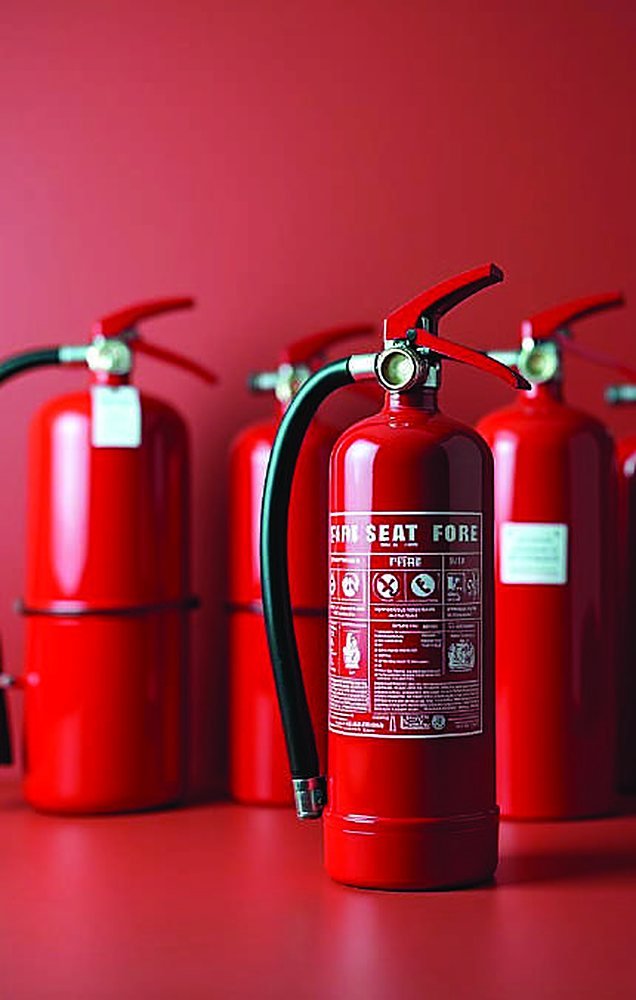
A fire extinguisher is your first line of defence — but only if it works the moment someone grabs it. Here is a simple way to think about keeping extinguishers ready in an office, shop, restaurant or warehouse.
1. Quick monthly checks
Once a month, someone on site should walk the building and check every extinguisher:
- It is in its marked location, visible and not blocked.
- The pressure gauge needle is in the green zone.
- The safety pin and tamper seal are intact.
- There is no visible damage, corrosion, leakage or a blocked nozzle.
- The service tag is present and up to date.
2. Periodic maintenance by a qualified technician
Extinguishers also need regular maintenance by trained technicians — at least once a year under the widely used NFPA 10 standard, and more often where a contract or the authority requires it. Technicians check the mechanical parts, extinguishing agent and pressure, recharge units after use, and update the service tag.
3. Hydrostatic testing
The cylinder itself must be pressure-tested (hydro-tested) at fixed intervals — under NFPA 10 this is typically every 5 or 12 years, depending on the extinguisher type. Units that fail are taken out of service and replaced.
Which extinguisher for which fire?
- Water and foam: ordinary combustibles such as paper, wood and fabric (foam also helps with flammable liquids).
- Dry powder: a versatile choice for many mixed risks.
- CO2: electrical equipment and server areas — no residue.
- Wet chemical: commercial kitchens and cooking-oil fires.
Your exact inspection intervals depend on Civil Defence requirements and the extinguisher type. Your maintenance provider should confirm these for your site.
Let HST handle it
HST supplies all common extinguisher types and covers monthly and quarterly inspections, servicing, recharging and hydro-testing — on its own or as part of an annual maintenance contract with 24/7 on-call support.